2026年11月11日にPreviewリリースされた Qwen 4.0 Preview を使ってみる話です。 CLIでテキストチャットと画像理解のテストまで一覧の操作を順番に確認する記録です。
目次
Qwen 4.0 Preview について
Qwen4-Max-Preview(API上の別名 qwen4.0-max-preview)は、Alibabaが2026年11月11日に公開した次世代フラッグシップAIモデル「Qwen4-Max」の2週間限定先行プレビュー版です。
公式情報(https://docs.modelstudio.console.alibabacloud.com/ja/model-studio/qwen4-max-preview)をベースにまとめてみました。
仕様は以下。 最大出力39万トークンなのが特徴になりそう(質も伴わないとだけど)
| 項目 | 内容 |
|---|---|
| モデルID | qwen4-max-preview(別名 qwen4.0-max-preview) |
| コンテキスト長 | 最大 100万トークン |
| 最大出力 | 393,216トークン(思考+回答) |
| 対応入力 | テキスト・画像・動画 |
| 推論モード | 標準で有効(low / medium / xhigh) |
| 重み(ウェイト) | 非公開(クラウド提供のみ) |
Previewの使い方は大きく2つです。 1つはQwenの専用アプリから使う方法です。 私は使ったことないので詳しくはないのですがアプリ入れれば使えるので手軽にすぐに試したいときは良いと思います。
もう1つの方法は Alibaba Cloud の Model Studio で Token Plan というサブスクリプションから利用する API を呼び出して利用する方法です。 Model Studio はWeb UIあるのですがこの Qwen4-Max-Previewではまだ使えません。 なのでCLIやRESTでAPIを利用します。
まず、提供期間は限定で2026年11月11日から11月25日までです。 期間終了とともにモデルの提供も終わると(Previewが取れたものが新しく提供されるはず)。
また、料金はPreviewということで80%のディスカウントとか、さらに夜間はもっと安くなったり。 まあ、料金については公式の情報を確認してみてください。
作業の流れ
今回の qwen4-max-preview を使ってみた話の作業の流れ。
- Alibaba Cloud Model Studio で Token Plan を契約
- Token Plan で API Key を発行
- Bailian CLIをインストール
- API Endpoint にログイン
- Qwen4-Max-Previewを使ってみる
Alibaba Cloud Model Studio で Token Plan を契約
私はすでにStandard を契約済ですが、Alibaba Cloud の qwen4-max-preview を使う場合は何らかの Token Plan の加入が必要となります。
以下は公式サイト(https://www.alibabacloud.com/help/ja/model-studio/token-plan-personal-overview)の情報を転記しています。 最新の情報は公式サイトで確認してみてください。
| プラン | ライト | エッセンシャル | スタンダード | プロ |
|---|---|---|---|---|
| 料金 | $6/月 新規ユーザー向け期間限定価格 $3/月 | $10/月 新規ユーザー向け期間限定価格 $5/月 | $18/月 | $43/月 |
| 月間クォータ | 20,000 クレジット | 45,000 クレジット | 80,000 クレジット | 200,000 クレジット |
| 同時実行エージェント数 | 1-2 | 2-3 | 3-4 | 6-8 |
| 特典 | マルチモーダルモデル組み込みツール主流ツール対応 | Lite の全特典 | Lite の全特典 | Standard の全特典より高い同時実行制限 |
Token Plan で API Key を発行
Alibaba Cloud Model Studio のコンソールにアクセスし “Plan-Specific API Key”から “Generate”を実行する。
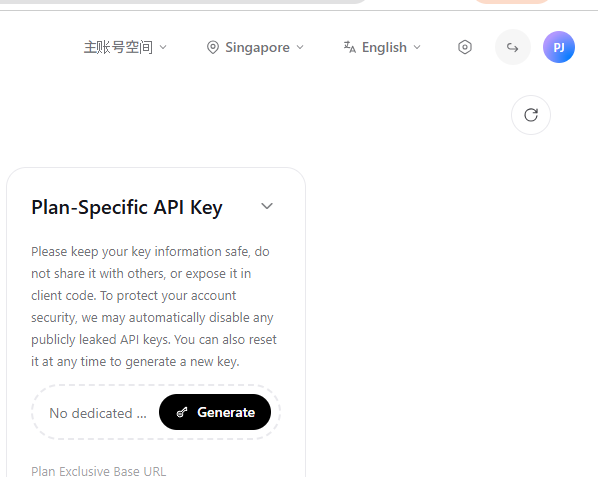
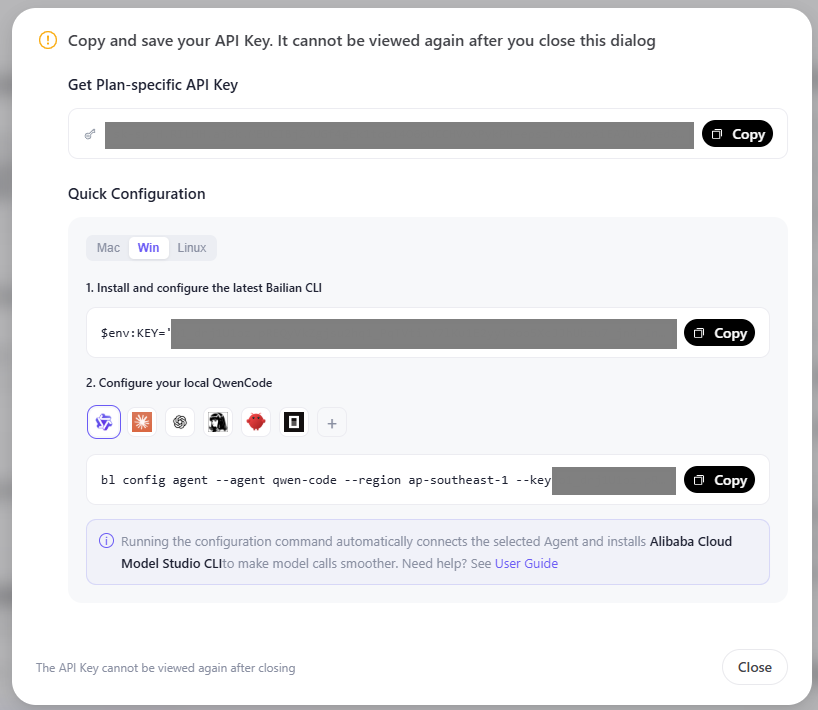
API Key を取得します。 大事に、厳重に保管します。
1つ目の “Get Plan-specific API Key”は APKへの Access Key そのものです。
2つ目のQuick Configuration は CLI のインストール手順です。 今回はここで紹介されている Balian CLI を使用しますが他のCLIやRESTを利用する場合はこのQuick Configuration の手順は不要となるでしょう。
Bailian CLIをインストール
先ほどAPI Key 発行時の Quick Configuration の “1. Install and configure the latest Bailian CLI” のスクリプトを実行します。
Windows 11 Pro の環境で実行します。
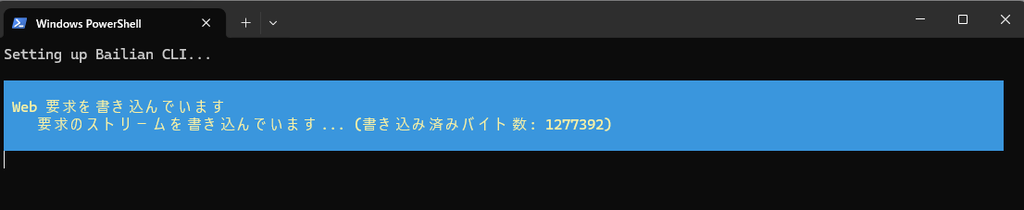
インストールには結構時間がかかります。 進行中の画面。
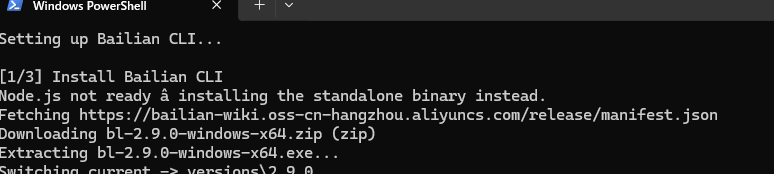
途中、自分の環境のパスとか見えてしまっているので画面の紹介は省略しますが無事インストールは完了。
API Endpoint にログイン
qwen4-max-preview のEndpoint は決まっています。”https://token-plan.ap-southeast-1.maas.aliyuncs.com“になります。
接続する Endpoint に関する公式情報はこちら
Windows の Powershell からCLIを実行していきます。
ところどころマスクしていますが、 <YOUR_API_KEY>には先ほど発行したAPIを設定します。
(1) ではAPIに接続します。
(2)では正常にログインできているかを確認します。 Config が”token-lan”となっていればOKです。
(1) endpoint へのログイン
PS> bl auth login --config token-plan --api-key <YOUR_API_KEY> --base-url https://token-plan.ap-southeast-1.maas.aliyuncs.com
API key validated and saved to C:\Users\XXXXXX\.bailian\config.json


(2) 認証ステータスの確認
PS> bl auth status --output json
{
  "authenticated": true,
  "config": "token-plan",
  "config_file": "C:\\Users\\XXXXXXX\\.bailian\\config.json",
  "api_key": {
    "source": "config",
    "masked": "sk-s...Ut1E",
    "base_url": "https://token-plan.ap-southeast-1.maas.aliyuncs.com"
  }
}
qwen4-max-preview を使ってみる
テキストでのチャットと画像理解の2つを簡単にテストし qwen4-max-previewが利用できることを確認していきます。
“bl text chat” でmodelに”qwen4-max-preview” を指定してチャットします。
今回はまずは使えるところまでのテストなのでシンプルな質問文で問いかけます。Response に答えが返ってきたので動作OKです。
PS>  bl text chat --model qwen4-max-preview --message "あなたは qwen4.0 ですか?"

BAILIAN ~\.bailian\config.json | Auth: XXXXXXXXX config · api-key
Thinking:
The user is asking in Japanese: "Are you qwen4.0?" I should answer honestly. I'm Qwen, developed by Alibaba Group. Regarding specific version numbers, I don't have reliable information about exact version designations, so I should say I'm Qwen but can't confirm specific version numbers, and suggest checking official sources.

I should respond in Japanese since the user wrote in Japanese. Keep it concise and honest — I shouldn't claim to be "qwen4.0" specifically, nor deny being Qwen. Let me be natural and helpful.

Let me think about what I actually know: I am Qwen, a large language model developed by Alibaba Group. I don't have precise knowledge of my exact version number/release designation. So the honest answer: "I'm Qwen, developed by Alibaba Group. As for the specific version number like '4.0', I can't say for certain — please check the official website or technical reports."

Keep it fairly short.

Response:
私は Qwen です。Alibaba Group によって開発された大規模言語モデルです。

ただ、「4.0」といった具体的なバージョン番号については、私自身は確実な情報を持っていないため、断定してお答えすることができません。正確なバージョンやモデルの仕様については、公式サイトや技術レポートをご確認いただくのが確実です。

何かお手伝いできることがあれば、お気軽にどうぞ。
もう1つ質問。 回転すしにについて聞いてみた。(回転すしについて聞いた理由は特になし。 何を聞こうかなーと考えて頭に浮かんだものがたまたま回転すし)
生成AIと壁打ちしたり、会話することが日々増えているけど、最後の答えよりも思考過程がおもしろい。 Qwenもしっかりと思考過程を見せてくれる。 以下だと”Thinking:”から”Response:”までの斜体文字のところ。 今回はそうでもないけど、以前の会話だとほんと人間臭い思考過程を見せてくれる。 ”うーん、この人は何を考えているだろうか、最初はAかと思ったけどさっきの話を聞くとBだと思えきた、みたいな。
PS>  bl text chat --model qwen4-max-preview --message "日本に回転すしのお店は何店舗あるか、また、それだけの数がある理由を考察して"

Thinking:
The user asks in Japanese: "How many conveyor belt sushi (kaiten-zushi) restaurants are there in Japan, and analyze why there are that many."

I should give an estimate with appropriate caveats about data sources and uncertainty. Let me recall what I know.

Kaiten sushi market data: The 回転寿司 market size is around 1,500-1,700億円 (some estimates ~1,600億円). Number of stores: commonly cited figures around 3,000-4,000 stores nationwide. Let me think.

Major chains:
- スシロー (Sushiro / Akindo Sushiro): about 650 stores in Japan (as of ~2023-2024, ~640-660). Actually Sushiro had ~630 domestic stores in 2022, ~650 in 2024. They aim for ~1,000 domestic long term? Their target is 1,000+ stores domestically? Actually FOOD & LIFE COMPANIES targets ~800-1,000 in Japan. Let me use approximate ~650.
- くら寿司 (Kura Sushi): ~500 stores in Japan (as of 2023 ~490-510). Kura had 486 domestic in 2021, ~500+ now.
- はま寿司 (Hama Sushi, Zensho): ~600 stores domestic (as of 2023 ~580-620). Hama sushi reached 600 stores around 2023.
- かっぱ寿司 (Kappa Sushi, Colowide): ~300 stores (declining from peak ~350). Around 280-310.
- 元気寿司 (Genki Sushi): ~140-160 domestic (including 魚べい/Uobei which is Genki Sushi brand). Actually Genki Sushi domestic ~ 魚べい ~ 130-160. Genki Sushi has ~ 180 stores domestic total? They have ~ 400 total worldwide with many overseas. Domestic 元気寿司+魚べい ~ 150-180.
- 銚子丸 (Choshi Maru): ~80 stores (non-conveyor mostly, some conveyor)
- 回転寿司 北海道 chain: トリトン (Triton) ~ 30-40, なごやか亭 (Nagoyaka-tei, 三ッ星) ~ 30, 函太郎 ~ 20, 根室花まる ~ 25 (mostly not conveyor).
- がってん寿司 (Gatten Sushi, RDC/アールディーズ): ~ 100 stores.
- 海鮮アトム, 廻転寿司 魚がし etc.
- すし銚子丸 etc.

Total of major chains: 650 + 600 + 500 + 300 + 160 + 100 = ~2,310. Plus regional chains and independent shops, maybe another several hundred to 1,000. So total ~3,000-3,500. Commonly cited number: 回転寿司店は全国に約3,000店舗 — I've seen figures like "全国に約3,000店" or "約4,000店".

Actually, some data: 日本フードサービス協会 or 食品産業センター. There's a well-known stat that sushi restaurants overall (寿司店) in Japan ~ 20,000+ (経済センサス). The 平成28年経済センサス: 寿司店 約 21,000? Let me think: 「すし店」 in 日本標準産業分類 under 専門料理店. The 経済センサス活動調査 shows 寿司店 ~ 20,000-24,000 establishments. Hmm, in 2016 economic census, 寿司店 was around 22,000? Some sources say すし店 約2万店. Of those, kaiten sushi ~3,000-4,000.

I recall a figure often quoted: "回転寿司の店舗数は全国で約3,000店舗" and market size ~1,500億円. Also ぐるなび data. Another: 矢野経済研究所 estimates 回転寿司市場 2019年 約1,600億円.

I should be honest that there's no definitive official count, give a range ~3,000〜4,000 stores (major chains ~2,300-2,500), and note the uncertainty and my knowledge cutoff.

Let me also consider: スシロー 650+, はま寿司 620, くら寿司 530, かっぱ寿司 290, 元気寿司/魚べい 170, がってん寿司 90, others. Sum ~2,350. Then non-chain: many local kaiten sushi shops. Each prefecture might have 10-30 independent ones. 47 prefectures × 20 = ~940. So total ~3,300. So ~3,000-3,500 seems reasonable. I'll say "おおむね3,000〜4,000店舗" with major chains around 2,300-2,500.

Per capita: 3,300 stores / 124 million = 1 store per ~37,000 people. Compare: McDonald's Japan ~2,900-3,000 stores, Yoshinoya ~1,200, Sukiya ~1,900, Matsuya ~1,100. So kaiten sushi has about as many stores as McDonald's — that's a striking comparison. Starbucks Japan ~1,900. So kaiten sushi ~3,000+ is more than Starbucks. That's a good analytical hook.

Now the analysis of why so many:

1. Demand side:
- Sushi is a national "special occasion" food with high cultural prestige, but traditional sushi shops are expensive and intimidating (no prices, counter-only, etiquette). Kaiten sushi democratized it: transparent pricing (100-150 yen/plate), family-friendly, no need to know etiquette, easy to enter. Converts latent demand for "sushi" into mass-market frequency.
- Price point ~1,000-1,500 yen per person: sits between gyudon (~700) and family restaurant (~1,200-1,500), competitive with casual dining but with "sushi" premium perception → high perceived value.
- Family segment: kids love it, games (くら寿司 ビックリポン), variety of non-fish items (meat, fries, ramen, dessert) → broad menu accommodates non-fish eaters, so groups don't veto. This is key for chain expansion — a "veto-proof" format.
- Visual display: rotating sushi shows the product, reduces ordering anxiety, stimulates impulse purchases (adds to average ticket), and no menu-reading barrier for foreigners/kids.

2. Supply/operations side (why the format supports many stores):
- Automation: rice robots (shari-dama), 酢飯 mixing machines, sushi robots (Autec, Suzumo), touch panels ordering + express lanes → drastically reduces dependence on skilled itamae. Traditional sushi requires years of training; kaiten sushi decouples skill from output. This is THE fundamental enabler of scale — labor bottleneck removed.
- Standardized manuals: part-time staff can be trained in weeks. Enables rapid multi-store expansion and low labor cost ratio.
- Central kitchens / centralized procurement: massive buying power for fish (global sourcing, frozen/at-sea processing), rice, etc. Scale economies make the 100-yen price possible.
- Technology: IC tags on plates → automatic sales tracking, discard management (廃棄ロス), demand forecasting, freshness management (くら寿司 抗菌シャッター, 生食用ガイド). Reduces waste and food safety risk. Also labor: automated dish return, water taps, 皿洗浄 robots, 自動会計.
- Store model: suburban roadside, large parking lot, ~80-120 seats, high seat turnover, box seats + counter with conveyor. Real estate cheaper than urban prime. Standardized store prototype → repeatable rollout. Large trade area (car-based, 5-10 km radius) → each store covers a wide population; but ~30,000-40,000 people per store is sustainable given high frequency and family occasions.
- High volume/low margin but high ROI on standardized capital; chains have capital and supply chain to expand.
- Also: conveyor as "theater"/entertainment = differentiation vs. other fast food, plus reduces perceived wait.

3. Industry structure / competitive dynamics:
- Four big chains (Sushiro, Hama, Kura, Kappa) in an oligopolistic scale race → land-grab expansion, store count as competitive weapon (procurement scale, TV ad efficiency, national brand). Nationwide coverage needed to amortize TV CM and buying power. This "店舗数競争" itself inflates store counts.
- Zensho (はま寿司) has capital from Sukiya, uses its 出店 know-how & 立地 database; FOOD & LIFE (スシロー) and Kura pursuing suburban and regional expansion; low store density in some regions still.
- Regional chains (Hokkaido Triton/Nagoyakatei, etc.) differentiate on quality, occupy niches.
- Entry barriers relatively low for independents (conveyor equipment can be bought; 業務用食材 suppliers, 寿司ネタ suppliers exist) → many independents too.
- Industry consolidation: independents converting to chains; but also many local kaiten shops remain because local fish and local tastes.

4. Historical/cultural:
- 元禄寿司 (大阪, 1958) invented; 1970 Osaka Expo exposure; 1970s-80s expansion; 1990s deflation era → 100円寿司 boom (げんき寿司, スシロー's 100円 campaigns), matched deflationary consumer mindset.
- Rice/fish consumption shifts: fish consumption declining in Japan, but sushi remains popular; kaiten sushi captures "sushi demand" broadly, plus menu diversification.
- Japanese preference for 生の魚, and the "外食で寿司" aspiration. Also 中食/テイクアウト option.

5. Why Japan specifically (contrast overseas):
- Cold-chain and raw fish food-safety infrastructure, hygiene standards, and consumer acceptance of raw fish.
- Domestic supply chain for sushi-grade ingredients and sushi robots manufacturers (Autec, Suzumo are Japanese).
- Sushi's cultural legitimacy as everyday food; in other countries sushi is exotic/premium, so scale is limited (though growing).

6. Counterpoints / limits (to make analysis balanced):
- Saturation: cannibalization, 共食い, closures of weaker chains (かっぱ寿司 shrinking), labor shortage and rising fish costs (円安, 世界的な水産物需要, サンマ/サケ不漁), 100円価格の維持困難 → price increases (スシロー 110円〜, くら 115円〜). Store count growth may plateau; consolidation likely. Also 迷惑動画 (2023 スシロー醤油差し) impacted.
- Actually current: kaiten sushi store numbers roughly flat/slightly growing; growth is now overseas.
- Note: some "回転寿司" statistics conflate 非回転の chain sushi (銚子丸, 根室花まる) or 宅配寿司.

I should present numbers with clear caveats, note as of my knowledge (2024-2025), and suggest sources for precise counts (各社IR/決算資料, 日本フードサービス協会, 経済センサス, ぐるなび/食べログ). Should be honest about uncertainty — I shouldn't fabricate precise official statistics.

Format: Japanese answer. Use headings, a table for chain store counts (approximate, flagged), then analysis structured into demand/supply/competition/history, then caveats/limits. Moderate length — this is a research-ish question, so a fairly thorough answer with structure is appropriate, but not overly long. Maybe 900-1400 Japanese characters... actually more like 1800-2500 characters with structure. Let's aim for a well-organized medium-long answer.

Let me be careful with chain numbers, mark them as approximate and "2024年前後の各社公表値のおおよそ".

- スシロー: 約650店 (国内)
- はま寿司: 約620店
- くら寿司: 約530店
- かっぱ寿司: 約280店
- 元気寿司・魚べい: 約170店
- がってん寿司 etc.: 約100店
Sum ≈ 2,350

I'll present as "大手6チェーン合計で約2,300〜2,500店" and total "3,000〜4,000店程度" — commonly cited ~3,000.

Population per store: 3,000店 → 約4万人に1店. McDonald's ~3,000. Good comparison.

I'll note the uncertainty upfront briefly, then deliver.

Let me write it.

Structure:
1. 店舗数の目安(結論)
   - table of major chains
   - 全体3,000〜4,000程度、確定的な公的統計はない
   - 人口あたり比較
2. なぜそんなに多いのか
   ① 需要側:「寿司」という高関心商品を大衆価格に開放した
   ② 供給側:職人技の分解=脱熟練(最大の要因)
   ③ 立地・業態設計:郊外型×ファミリー×多品種
   ④ 技術:レーン+タッチパネル+ICタグ
   ⑤ 競争構造:寡占の店舗数競争
   ⑥ 歴史:1958元禄寿司→万博→デフレ100円
   ⑦ 日本固有の条件(生の魚の受容、コールドチェーン、寿司ロボット産業)
3. ただし今後は?(飽和・コスト・海外)
4. 数字を確かめるには

Keep it tight. Use markdown headers and a table.

Response:
## 1. 店舗数:ざっくり「3,000〜4,000店」

まず前提として、**「回転すし店」だけを切り出した公的な確定統計は存在しません**(経済センサスの「すし店」には高級店・持ち帰り店も含まれる)。そのため業界推計と各社の出店数を積み上げた目安になります。以下は2024年前後の各社公表値にもとづく概数です。

| チェーン | 国内店舗数(概数) |
|---|---|
| スシロー | 約650 |
| はま寿司(ゼンショー) | 約600 |
| くら寿司 | 約500 |
| かっぱ寿司 | 約280 |
| 元気寿司・魚べい | 約170 |
| がってん寿司 ほか | 約100 |
| **大手計** | **約2,300〜2,500** |

ここに地方チェーン(トリトン、なごやか亭、函太郎など)と個人経営店が数百〜1,000店規模で加わり、**全体で3,000〜4,000店程度**とみられます。

この数字のインパクトは比較すると分かります。**マクドナルド(約3,000店)やスターバックス(約1,900店)と同等以上**。「日本人が最も頻繁に利用する外食チェーン業態のひとつ」が回転すしだということです。人口4万人弱に1店。

---

## 2. なぜそこまで増えたのか

### ① 最大要因:職人技を分解し、「脱・熟練化」に成功した
本来、寿司店は**板前の育成に10年単位**かかり、これが最大の出店ボトルネックでした。回転すしは工程を分解し、
- シャリ → 酢飯ロボット・シャリ玉成型機(オートック、鈴茂器工など)
- ネタ → セントラルキッチン+海外を含む大量調達・加工済み食材
- 握り → 寿司ロボット+マニュアル化されたパート作業

に置き換えました。**「熟練労働力に依存しない飲食業態」に変えたこと**が、数百〜千店規模の複製を可能にした根本理由です。他の和食(割烹・天ぷら・鰻)がここまでの店舗数にならないのと対照的です。

### ② 需要側:高級・敷居の高い「寿司」を大衆に開放した
寿司は日本人の嗜好ランキングで常に上位ですが、従来の寿司店は「時価」「カウンターのみ」「暗黙の作法」という参入障壁がありました。回転すしは、
- **皿色で価格が可視化**(1皿100〜150円、1人1,000〜1,500円)
- 現物が目の前を回り、**注文の意思決定コストがゼロ**
- ファミリー・子連れ・一人でも入りやすい

ことで、**「寿司を食べたいが店は怖い」という潜在需要を丸ごと市場化**しました。牛丼(約700円)とファミレスの間という価格帯も絶妙です。

### ③ 業態設計が「否决されにくい」
魚が食べられない人でも、肉寿司・炙りチーズ・ラーメン・フライドポテト・デザートがある。**グループ内で誰かが行きたがらない理由を潰す多品種構成**は、家族の外食で極めて強い。加えて「回っている」というエンタメ性(くら寿司のビッくらポン等)
何も考えずに聞いてみたけどタメになる答えが返ってきた。 マクドナルドよりも多いくらいあると。 たしかに、うちはすごい田舎の地方住まいだけどマクドナルドある町には回転すしあるしマクドナルドなくても回転すしある町あるし店数も多いのが実感。
応答速度がわかるようにGIF動画も準備。 こちらは質問は簡単なものにしています。
PS> bl text chat --model qwen4-max-preview --message "すしで10番目位に人気があるネタは?"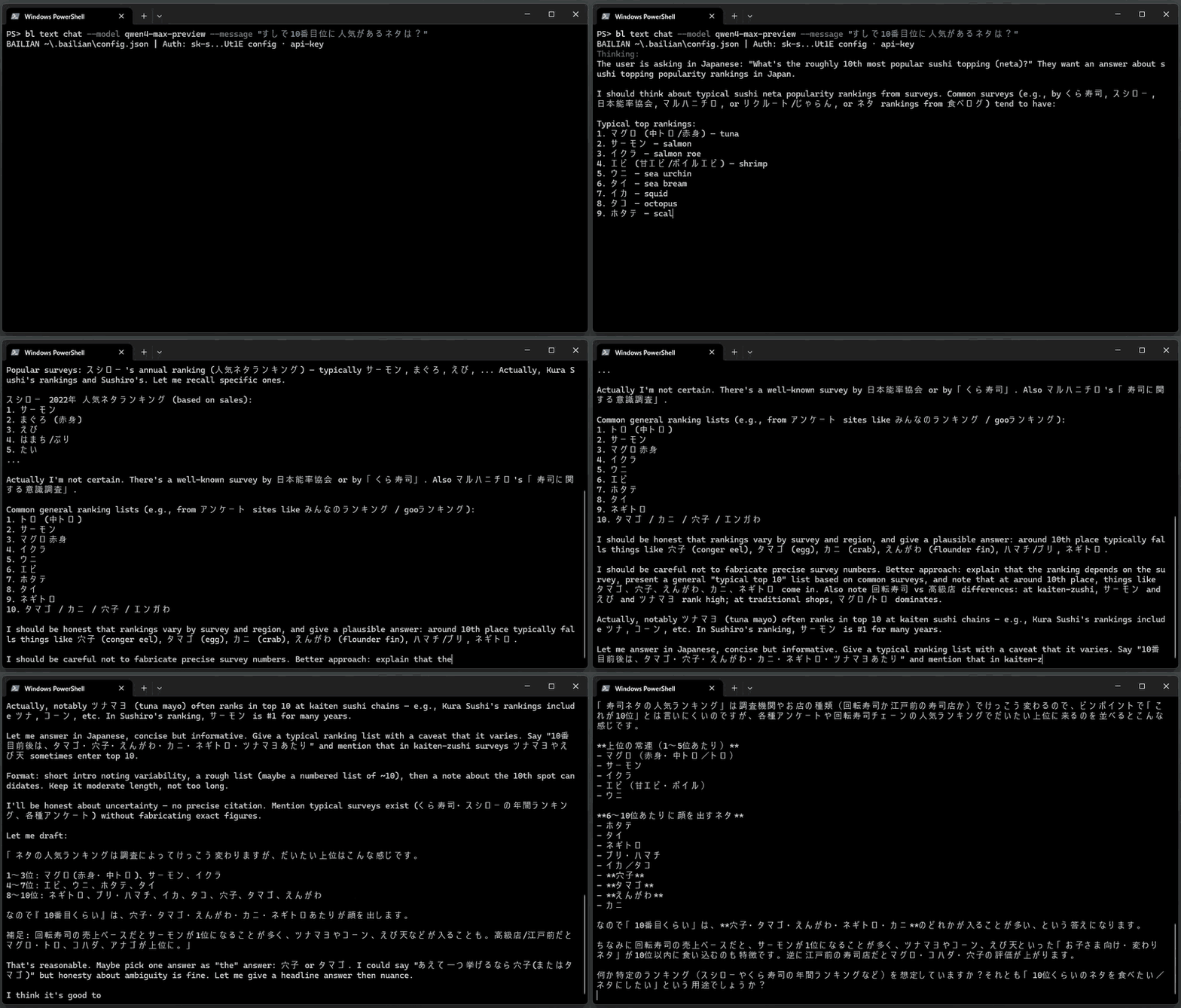
qwen4-max-preview ですが、OUTPUTはtextしか対応していないのですが、INPUTには画像と動画が対応します。 画像の理解もテストします。
以下、Google Gemini で生成したトリック画像について、何が見えるか qwen4に答えてもらいます。

画像理解は”bl vision describe”を利用します。 –image でINPUTする画像のURLを指定し、–modelにqwen4-max-preview を指定し、–promptで質問文を指定します。
背景が透過されたトラもしっかりと認識し、フクロウやリスモ正しく認識しています。
PS> bl vision describe --image "https://www.bigriver.jp/wp-content/uploads/2026/11/Gemini_Generated_Image_at12xqat12xqat12-767x428.jpg" --model qwen4-max-preview --prompt "この画像には生物はいますか?"

BAILIAN ~\.bailian\config.json | Auth: XXXXXXXXXX config · api-key
はい、います。この画像はイラストですが、いくつかの生物が描かれています。

- **トラ**:中央を歩いている大きな動物
- **フクロウ**:左側の枝にとまっているもの(2羽ほど)
- **リス**:右側の木にいるもの(2匹ほど)
- **小鳥**:枝先などに数羽
- **植物**:木々、ツタ、シダ、苔などの豊かな植生

つまり、動物と植物の両方が描かれた、森の中の情景です。
以上